
Summer 2013
I moved back to my hometown of Alton, Illinois, after living and working for forty-five years as a playwright, actor, and adjunct English professor of English, in Chicago. None of those professions offered pensions; I was running out of money, and rents were cheap three hundred miles south, where I grew up. I found a small rental house, which became “Genehouse,” and I began writing about the residents and natural beauty of the Mississippi River Valley.
I met local characters: Hummingbird Man (Vance), a self-proclaimed river rat; Indian Bob; Stevie, the elderly woman proprietor of Stevie’s Fish Stand on the river; and farmers Mike and Cathy, who ran a fruit and vegetable stand next to my house.
Across the highway from Mike and Cathy’s was a sign: “Pick your own blackberries.” For some reason, I didn’t follow that sign. Then it appeared again the next summer, and this time I walked up the long driveway to the farm.
An older man wearing rubber boots, khaki trousers, a ballcap that had seen better days and a long-sleeved shirt was holding court with several women customers. A name was stitched above the right breast of the shirt: “Orville.” A herder dog named Reba was barking and running around. The customers, mostly women, were laughing at Mr. Hartmann’s every aphorism, Missouri Synod Lutheran anecdote, and homily on marriage; he clearly enjoyed the attention. I grabbed a berry bucket and and began to pick.
When I came out of the patch, Orville Hartmann greeted me. I wrote two pieces about him for The Telegraph, the Alton newspaper, and people at his church told him he was famous. His wife Beverly, who I call Quilt Queen (she quilts), joked that I had ruined her husband by writing about him.
Winter 2014
My hike this morning led me down Clifton Terrace to the Great River Road, along the Mississippi River, west then up Stroke Hill (some call it Mt. Buttbreaker) to Route 3. It was warm for January, with little wind. I saw gulls, bald eagles, a snowy egret and…robins. Robins filled the woods and cliffsides, pale orange, chattering away. It is easy to take these T Rex descendants for granted, but a forest of gossiping robins is a splendid thing.
Their din made me think of my neighbor Orville, he of a high-pitched voice. I stopped at his house and joined him and wife Quilt Queen (Beverly) for coffee and chocolate chip cookies. They hadn’t seen me since my shoulder surgery, so I demonstrated my new and improved shoulder and said the St. Louis Cardinals were recruiting me. They laughed; they think I’m funny.
Orville looked about five pounds heavier. His hands were placed on his stomach, the way a pregnant woman might cradle her baby bump. Quilt Queen said it: “Did you notice my husband has gained weight? You know what we call it?”
“Cookie weight,” Orville said. In the Tao of Orville, cookie weight is necessary—it gets rid of the cookies. I pointed out that he could throw the cookies away. No, no, no. “Put them cookies through the digestive tract.” Wise words indeed.
“And you take you a tub home, Gene.” A tub of cookies? No, no, no. I managed to get away with a mere Ziplock bag of cookies—just to be neighborly and enjoy a nosh while Wisconsin kicked some butt in college football.
Quilt Queen exclaimed, “Oh, you have got to see our other son’s portrait. He gave it to us for Christmas.” She fetched the framed photo and passed it to me. I was looking at a mini-Orville, same shortness of height, wide forehead and narrow chin, sardonic lips built for wisecracks, sparkle in the eyes.
“A dead ringer for your husband,” I said.
“I’m not sure that’s a good thing,” Quilt Queen said. You can’t read her expressions. Her lips are not loose; her eyes are watchful, calm and steady. If you’re a disappointing husband, you might want to bunk in the chicken coop.
“Sleep with chickens, they will eat you,” Orville said. “Hell, they eat their own eggs. I find out which one is doin’ that, that bird will have a new name: dinner. I guess my son lookin’ like me is a good thing. For years, I thought the mailman was his father.”
First rimshot of the new year: Ba-dum-bum. Quilt Queen’s laser beam eyes cutting her husband to thin slices.
Spring 2015
There is a country café above Genehouse, on Route 3. It has just enough kitsch to make it interesting. There are signs on the walls, with jokes about coffee, and a sexy Coke poster from bygone days, depicting a forties lass in a bathing suit, sitting on a beach, her legs slightly parted, and a bottle of Coke extended from off poster, and our lass looks at the phallic symbol and says, “Yes.”
Most days, the waitresses are three sisters, twenty-something blondes. They wear Lululemon-style pants. (I mention the costumes as your fashion commentator, not as a concupiscent man.) The siblings share a bond with Chekov’s “Three Sisters,” always looking out the long wall of north-facing windows, past the Baptist church across the highway, perhaps looking for a more exciting life and better days, always talking about cities, the glamour of cities. Two part-time waitresses—we’ll call them Sally and Sissy—aunts of the three sisters, are friendly women my age. I can’t remember what they wear.
The cook, the three sisters’ mother, makes wonderful whole grain pancakes. On Thursday, her special is ham and beans, all you can eat. And yesterday was Thursday and the waitresses were the women my age, damn it, though they are perfectly nice and way more attentive to one’s coffee and ham and beans needs.
Orville and I sat at a table and ordered ham and beans, all you can eat. The radio blared country and western music, the twenty-first century, neo-rock and roll kind that would make Johnny Cash vomit were he alive. Farmers in overalls, a young mom with a baby girl, two cable TV installers, and a table of little old ladies quietly masticated their H & B and gossiped. We sipped our coffee and flirted with the baby girl, who was smiling and cooing.
At the first table, across from the doughnut display and ice cream bar, a man and wife and the man’s ninety-year-old father sat and ate. The old man, his face layered in thick folds of wrinkles, and white hairs like strands of kelp poking out all over his face, was hard of hearing; he shouted as opposed to talked. He was very agitated; his daughter-in-law kept hushing him: “Dad, dad, be still now.”
“What in hell for?” Dad asked. “Why ain’t them three young perty gals waitin’ on me?”
The gossiping stopped and the room went quiet, save for the baby. Thankfully, Sally and Sissy were in the kitchen, out of ear- and old man-shot.
“Dad, Dad, now, we don’t talk like that.”
“You don’t—I do. I COME HERE FOR THE GALS. Son,” the old man screeched, “why you come here?” What male customer hasn’t asked himself that very question? But the son looked at his wife, the source of his bliss, certainly his cook.
“The food, Pop.” The wife nodded.
Sally came out of the kitchen, her eyeglasses steamed up, her gray hair done up in a bun, a smear of beans on her white apron, a new pot of coffee in her hand. She refilled the cups of the son and his wife and shouted to the old man, “Denny, want some more ham and beans, Sugar?”
“No, I do not.”
“No? You are skin and bones, darlin’.” Denny was as rotund as a pup tent; he looked like Jabba the Hut with a shock of snow-white hair.
“You got to eat somethin’, Dad,” the daughter-in-law said. “What do you want?”
“Oh,” the old man muttered, pushing his bowl of ham and beans away, “Some hash browns and a vanilla bear claw will do me—one them with puddin’ inside.” Then to Sally: “These are the worst ham and beans I ever et! Don’t ever serve me them again. I only like—what’s that kind?”
“Campbell’s,” the daughter-in-law said, shaking her head.
“That’s them: Campbell’s Pork and Beans. And WHY A OLD LADY GOTTA WAIT ON ME? And WHERE THEM YOUNG SISTER GALS?”
“Dad!”
The other patrons laughed silently, raised newspapers or menus to cover their reddened faces. The daughter-in-law mouthed, Sorry, sorry, sorry, so sorry.
Sally playing the straight man, like Johnny Carson. “Well,” she said dryly, to Jabba the Hut, “my nieces are so blinded by your beauty, Denny, they can’t work when you’re around.” Ba-dum-bum. I swear I saw Sally curtsey. Or maybe I wanted her to curtsey.
The old man nodded. He still had “it.”
On the walk to our homes, Orville made me swear to kill him if he ever went nuts. It was raining. In my head, I heard a radio, with that bad country and western band: “Who’ll stop the rain?” Remember Nick Nolte, young and muscular, rifle in hand in that movie, him slow motion striding to that tune? Have you seen him lately? Prunes look better. “And the rain came down.” Tom Petty, he with the long, thin hair and sallow face. Now he is a sallow cadaver.
“Rainy Ham and Beans Thursdays always get me down.”
The next day, the temperature climbed to fifty. The landscape had turned to melt and slush. I hiked down to the river, sweating in my hoodie and knit cap; I pulled them off and trudged through snow on the Great River Road trail, clad in a tee shirt and jeans.
I spotted a black cat walking across the ice floes, toward three juvenile bald eagles. I don’t know what the eagles said but I know a frightened cat when I see it. Great blue herons gawkily stepped through slush pools and grebes and mallard ducks and pelicans swam in open water. Two crows cackled and dipped their wings in river water and drip dried.
The melt along Stroke Hill revealed turkey, deer, mice, coyote and dog tracks. I looked up the two-mile hill and saw the drenched-in-sun golden treetops of weeping willow and oaks and Osage orange trees. And there was furious music coming from the bluff top.
I reached the summit, the music now a cacophony, and I could see the choir. A four- foot-long water puddle had been turned into a day spa. One male cardinal and four females were flapping in the water. They stepped out for a shake and were replaced by blackcap sparrows, heads raised and voices trilling exuberance. And on the parade went: chickadees, goldfinches, house finches, frenzied fat robins . . . and one Baltimore oriole, brilliant orange. A car came toward me and splashed the pool, the oriole hanging on until the last second.
I stopped at Orville and Quilt Queen’s house. Peregrine falcons perched on the rim of the horse’s water trough. Reba the dog and the barn cats, smelling of wet fur, followed me to the kitchen door. Orville’s basement freezer had died, leaving a five-gallon rotted slush of blackberries, deer meat, spaghetti sauce, and kale soup.
“I dropped my watch in a outhouse hole once,” Orville said. “I climbed down and got my watch and was soaked in crap. That there freezer? Smelled worse. The wife took a breath and vomited all over the floor. I bailed the mess into some water jugs and dumped them onto the driveway gravel. I didn’t even get back to the door, when all these wild birds dove into the crap and got drunk. It took me five baths to get the stink off me. Kids.”
The old bird talking about the new.
Summer 2016
It rained all night. Gentle rain, whispering rain. Sunny today the forecast said. It rained all morning. Seventy degrees, the leaves of the forest raining, a box turtle on the path, a young boy deer with four stubby antlers. A chipmunk sitting up and watching me. A girl finch on a telephone wire shocked when I sang her song.
The creek in La Vista Park overflowed, coffee-colored, creamy, dark and singing. I could feel the plants stretching, green growing pains, the rain as milk, see drowning worms emerging and slaughtered by robins. I saw ghosts of the First People ten thousand years ago, and the enslaved—yes, Illinois had slaves—walking the path and My Grandpa Red Jones’ ghost squatting on the riverbank, two fishing poles planted in the mud, him masticating a cigar and spitting the juice and taking a pull from a pint of whiskey.
A forty-ish woman in a green rain poncho passed me, stopped, and said she wished she was bald like me, bad hair day. Her name was Jenny. She said she liked my voice. We talked for half an hour, and I got nervous. I almost tap-danced, I was so squirmy. I said nice to meet you, and there was a slight pause. She looked at me. I looked at her. I turned and walked toward the swollen river. She climbed the long hill. I think something happened, but I’ve been out of the game so long, I wouldn’t know what to do. Well. Not well.
A barge sailed west toward Scotch Jimmy Island. Jimmy and riverboat pilot Mark Twain were friends. Sheets of rain on the river’s bed. A lone great blue heron languidly soared like a kite. Two Canada geese walked on the water. The River Road was closed; the Mississippi and Missouri and Illinois rivers were flooding. My neighbors and I could play dominoes on the pavement and not fear a racing car.
I stopped at Orville’s. I may be the only person who runs a tab on blackberries. He and I set up a system where I could sate myself without money, pay at the end of season. This may be a bad thing. I picked a pound of berries this afternoon, enjoying rare sunshine, popping plump samples, petting new dog Ruby Puppy, grooving on the baby birds nesting in the berry patch, swatting mosquitoes. Berries hung seven feet in the air where only I could pick them.
It was a miracle there were berries to pick. There have been two sunny days since June 9. We had four inches of rain last night. Tornadoes danced around us and tore off some roofs and brought down trees. But the berries stood. By the way, at the late summer ritual paying of the Orville produce bills, he would show me the paper then tear it up.
Ruby Puppy and the barn cats rubbed against me and licked my bare legs—Ruby thinks my name is Salt Lick. And they smelled. The rain, the swamp are wondrous things to domestic animals, and they wallow, and they carry poison ivy.
“Only thing better than blackberries,” Orville said, “is tomatoes and blackberries.” He doesn’t eat tomatoes but never mind. I have been known to eat ten tomatoes in a single day.
It had been a stressful day. The Alton Telegraph deadline for all stories for Homestyle Magazine was this afternoon. I had three stories in the next issue. My editor Vicki and I went back and forth about the word “wend.” “Use everyday words,” Vicki wrote.
“Wend is an everyday word,” I countered. “I’m wending my way to a nap.”
Where: I wander and wonder and wend my way and watch and wilfully get wet and waylay and willy-nilly with wisdom and whim and workmanlike will.
And I have blackberry breath.
Winter 2017
“You best sit,” Orville said. “Reba died last night, in the pole barn. I went out to feed her and Ruby Puppy, and Reba had crawled away from the heat lamp—to die, I guess. Her body was froze stiff. Ruby was pawing at her.”
The three of us sat at the kitchen table and wiped tears from our faces. Orville had dug a grave in the nearly frozen ground, carried our dear Reba and laid her in the hole, and buried her.
We did find some humor in the situation. Acres of voles, moles, snakes and mice could rest easy, as old Reba, who daily in spring and summer caught those creatures—tossing them into the air and swallowing them whole—was gone. But Ruby Puppy had completed her apprenticeship; rodent safety was temporary at best.
All the best things in life are temporary: young love and lust, tomatoes, wine, starlit nights, wilderness, wild things, music. The millennial generation seems to me to be more obsessed with taking smart phone photos of beauty rather than immersing themselves in beauty. Our best fiction is about characters breaking out of mundanity and diving head first into beauty, into sin, into flesh, into depravity, into all fruit and nectar of the world.
Quilt Queen said she wanted to go that way—freeze to death. Orville opined that fire was the way to go. In 1985, I came within minutes of freezing to death, as friends and I did our annual walk across the frozen Illinois River. It was five below zero, but the ice broke, and three of us plunged into the river. It took over an hour to pull me and the other guys out. I lost all feeling and sank into a deep sleep, my eyes freezing shut, a light glowing and pulling me to it, to my mother who was sitting on the ice in a summer dress and holding a wolf on a leash.
“Oh, to be a dog,” Quilt Queen said. “Reba didn’t know about death.”
I saw my father cry but two times: on his deathbed (he was terrified), and when our family dog, Candy, died. I was only twelve, and I watched this man of men sit on the basement floor and press the lifeless animal to his chest and sob, and I was fascinated.
Ruby Puppy and Reba are a hundred yards from my house. I have full run of the farm and permission to set the dogs loose and run with them. Reba has placed countless bodies of critters and songbirds on my shoes, for my approval. She has rolled in decayed bodies and dung of all types and then embraced me.
And now she is gone.
Ruby Puppy will run in the pasture at sunset, following her nose to the newly dug grave, and she will smell her loved one, and she will lie still and quiet. And one day she will be laid to rest in that field. And so shall I lie. And so shall you.
In a field of stardust, in Milky Way, riding the next wind or terrible storm to the stars and back again. And all around us are the story tellers, keeping the dark matter, which is memory: alive, fiery or frozen, still or leaping, drenched in tears, drowned in laughter.
Happy Clappy Spring 2018
“I cannot stand a happy clappy church,” my neighbor Orville said. “That minister we got now, he goes up and down the aisles, happy, happy, feel good about yourself. Religion ain’t about feeling good. I want a man of stature standin’ in a pulpit over me, ringin’ the truth. Them ACL Lutherans, they got women preachers.”
I just listened, and I searched the horizon for the spaceship that would take me home.
We watched Reba dog come running from the blackberry bushes, some poor critter dangling from her mouth. It was a field mouse. She tossed it, caught it in her jaws, bit down with a satisfying crunch and swallowed it whole, a mouse tail, the last bit, looking like a tampon string then disappearing into the belly of the beast.
I blanched. I’m awfully dizzy from the stent surgery these days. Reba, meanwhile, crawled between my legs and onto her back, a slight bulge in her tummy.
“What,” Orville said. “It saves me dog food. Did you think wolves eat brie?”
I never thought wolves ate brie.
“In the good old days, at church, men and boys sat on one side the aisle, women and girls on the other. Now they set together, they gossip. They do a lot of things when they’re together. Oh, don’t get me started.”
It doesn’t take much to get Orville started. Today was his seventy-seventh birthday. He complained that his kids and grandkids ate him out of house and home, the day before at his birthday party.
I looked at every angle of the house, the barns, the corral, the fields and woods. It was like I was seeing them for the very first time. The colors were more vivid, the birdsong sharper, the earth smell so intense.
The male barn cat jumped on me and hung from my left pants leg and bloodied my knee. I checked to make sure the blood didn’t run. I’m not supposed to cut my nails lest they bleed. I’m not to participate in contact sports. I’m not to eat fried foods. I read the doctor’s order over a plate of fried green tomatoes. I know what I’m not supposed to do, but there are no “to do” guidelines.
I have never been happy clappy. My old man used to clap me over the ears for small transgressions, plus I was in Jesus Christ Superstar for three years in the 70s, and my ears ring to this day. Now for a climax, he’s given me lethal cholesterol. I know what the mouse felt like, at the moment of crunch. I spent my childhood hiding from a master mouser. There is a heaven for mice. There is a hell for men.
Orville opened wide his arms. Silly me, I thought he wanted to hug me—I sure could have used a hug. He was just stretching. He said he’d have to pummel me if I came closer.
He wasn’t kidding.
Summer 2019
It is quite hot; we’ve had several days with heat indexes near 110 degrees. So I’m walking early in the morning when it’s a cool 86. This am, after bathing in Mississippi River steam and climbing Stroke Hill, I saw friends Mike and Cathy setting up their fruit stand at Delmar and Clifton Terrace, in front of the old, abandoned gas station. I crossed the road to Orville’s place. We sat on the porch and sipped Dr. Pepper, Ruby Puppy resting comfortably on my feet. There was a slight breeze, a tickle maybe. It was third nesting season around here, another round of male cardinals and finches and robins fighting one another for dominance. At Genehouse, two broods of two finches each already hung out at the feeder and screamed at their parents to feed them. A third nest was now in place and eggs laid.
Orville had a minor heart attack a few weeks ago. He’s fine now, or I wouldn’t be writing about him. He refuses to stop working, joking that if he doesn’t weed the tomato plants I would curse and throw a fit. He won’t let me do some weeding, of course: There is the Orville way and the highway. His kids and grandchildren have been showing up unannounced, grabbing his riding mower and mowing while Grandpa sulks in the kitchen and watches Fox News.
Ruby Puppy jumped up and ran into the yard and intercepted a vole dumb enough to appear above ground. She learned from mama Reba how to pick up voles, toss them in the air, catch them head first and swallow them whole. There is regular dog breath, and then there is vole-swallowed-whole dog breath, the latter making loved ones in the vicinity fight the urge to hurl.
“I ever tell you about our old neighbor Evelyn?” Orville said. “And this ain’t no story. Evelyn, she was like you, exercisin’ all the time but stiff. She got the bright idea to take a bath. In WD-40. She poured two five-gallon cans of WD-40 into her bathtub and laid in it and rubbed it all over herself. Then she’d drain the stuff—it went into the septic tank—and she’d shower regular.”
“You know this how?” I asked.
“Well, I wasn’t in the bathroom with her,” Orville said. “You know, you lay in ten gallons a WD-40, it ain’t gonna go up over your belly. You squish-like in it, rub it all over yourself. Evelyn, she knocks on our door and tells Bev (Quilt Queen) she found the elixir of life. You could always tell when Evelyn had the treatment—she smelled like a lubed car engine.”
At 4:30 I walked to the fruit stand. The Calhoun Peach guy drove up with tomorrow’s swag, and I helped carry the peach boxes to waiting tables. The smell was sensual, fecund, maturescent.
Two middle-aged women in summer dresses were buying a bunch of watermelons. I walked past them, arms laden with peaches, and I said, “If I ever meet a woman who smells like peaches, game on.”
The women exploded with laughter, then of them said to Cathy, without missing a beat, “Quick—sell me enough peaches that I can rub them all over my body.” The bold woman’s friend laughed and sneezed. I laughed—to cover my embarrassment and the fact that my bluff was being called in spectacular fashion—and sat in a lawn chair and hoped my speech would return to my mouth.
Meanwhile, Cathy told Mike, who was loading the women’s watermelons into their car. He walked up to other cars and carried the story forward, pointing to me, the shriveling guy in the lawn chair, and one of the customers honked his horn and gave me a thumbs up.
The bold lady smiled sweetly, and she and her friend walked to her car. Cathy grabbed a watermelon and headed for Orville’s place across the road, to tell the story with which Orville would torture me for months to come.
From the opera, “Don Giovani Eats a Peach”:
Don G. (chasing Donna Anna): “I am a man of superabundant words and few actions.”
Donna Anna: “I hope so, you pig.”
Don G.: “However. . . (harp glissando) May I rub this peach all over your body?
Donna Anna: “Fiend! No means no!”
I live in my imagination—not a bad place to be—where fantasy women indeed, rub Calhoun County peaches on their bodies. In real life, I am the caterpillar not the butterfly. If Jennifer Lawrence had showed up to the fruit stand and said, “Sell me enough peaches that I can rub them all over my body for…you, Gene,” I would have run for my life.
The next day, a single blackberry bush at Orville’s place yielded a pound of succulence in five minutes. I planned to take the berries home and soak and refrigerate them, and then tonight eat them, two at a time, placing the berries on the tongue and compressing until the berry eyes exploded in the Big Mouth Bang.
It was a quick pick, and then a sit under the carport with Orville and Ruby Puppy, who has her own wading pool next to her hidey hole in the tiger lilies. One of the barn cats climbed in my lap and Ruby tried to nuzzle the cat away, and the air was balmy and the sun shone.
Orville—he wore a polo shirt which read “Grandpa: everyday hero”—and I talked about bees, chickens, women, earthworms, Indians, and biologists—and the soul. I’m a charter heathen; I’m not concerned about the soul, but Orville is.
My friend decries the use of pesticides (“them young farmers use it because real farmin’ is too dang much work”), mows around clover patches so the bees have a nectar source.
A teenage kid and his mom drove up to pick berries. The kid saw the chickens, called hens roosters, and the roosters, hens, and Orville rolled his eyes. “They got them I-Pads they always lookin’ at and they’re stupid—no other word for it. That Kim Jung Un is a jackass kid, shootin’ missiles in the air to scare us. But then—kids. Do not get me started.”
Orville donates truckloads of produce to the local crisis center. “How many cucumbers can one man eat?” Women come in groups and pick his cucumbers. “What do they do with them?” “Oh,” Orville said, “they make batches of cucumber water. At least, that’s their story.” We talked about how native earthworms comprised only thirty percent of worms living in American soil. “We are goin’ to hell as a species, Gene.”
“I heard this biologist on NPR’s ‘Science Friday’, saying that worms don’t think, are blind and simply exist and work. Mammals see and dream; human animals tell stories in dreams and contemplate the universe—the universe is only there because we observe it. Is it a dream?”
“What about the soul? What’s the science guy say about that?”
“He didn’t mention a, uh. . . soul.”
My friend has been trying to get me to attend church with him and Quilt Queen. The Tao of Orville states that men in particular need to go to church and temper their concupiscent thoughts and actions.
End of summer you take your neighbor a watermelon, he tells you the wife and kids hadn’t yet eaten the one you gave them on Sunday. You offer free sweet corn and the other guy offers you free kittens. You stand by the side of the road, hold out fists full of tomatoes to the passing cars, and the passengers throw their tomatoes at you. You have zucchini fights because what in hell will you do with all of them dang things. Teachers dread the start of school because kids pile peaches, apples, squash, cucumbers, potatoes, God knows what else, on her desk. No, in Southern Illinois, means no damn produce.
“You got enough asparagus?”
“I got no asparagus.”
“You coulda spoke up. I will pick you some tonight after the tomatoes are planted.”
“Your kale is covered in worms. I made a salad, and I saw it moving in its bowl.”
“Protein. What in the hell is wrong with them weather guys on TV? They called for rain, and look at it. We are dry—the ground is cracked. I am cracked, I guess. I doubled the blackberries, strawberries, my back is killin’ me.”
“My cardinal babies got eaten last night.”
“You know what I call songbirds? Hawk food. Them barn cats you like to rub up against—they are bird assassins. They got most of the birds in the blackberry bushes dumb enough to think they was hid.
“I better go. I have six more blogs to write for that hotel chain.”
“Drop by in the pm. You’ll have you a bag of asparagus. What do you do with all that? You eat kale, spinach, asparagus. Ever crap in your pants?”
“Not lately.”
“I been messin’ with the green tomaters, and I am a itchin’ fool.”
We all are itching fools. Scratching our arms makes us bloody. Scratching our children’s arms, our spouses’ arms, our loved ones’ arms, strangers’ arms, will not slake our thirst for violence. Scratching our dreams only makes us more and more unhappy. We itch to build, to grow, to conquer, to satisfy sexual hunger, to eat blackberries, to get high, to see Earth’s God in wildflowers. Our radio telescopes now “see” one hundred million light years from our planet, a mere fraction of the distance to the Big Bang, a glowing place in time “out there.”
Autumn 2020
It was a dreamer’s day, warm temperatures, golden grass and trees and neon-colored, crackling leaves underfoot, mellow folks dressed in shorts and tee shirts, walking along the river.
Orville and Quilt Queen weren’t home, so I opened the dog pen and let out Ruby Puppy and Old Dog Bud, who was visiting. We romped across the fields, and the dogs dove at holes. Bud is elderly, but he was leaping in the tall grass. (Orville says he already dug a grave for Bud, also good for me just in case I die first.) We passed the beehives, which were abuzz with workers prepping for winter.
This morning’s air was sharp and fresh and fragrant. Fog as thick as oatmeal held in the sounds and compressed the echoes. I stood outside and breathed and listened to the chickadees and titmice scold me for being late with the bird feeder. What do these tiny balls of color and song make of me? Am I the god of birds?
The ground perspired. The sun burned through and the sky became blue-gray and I was grateful to be alive. The remnants of last year’s corn harvest gleamed. The cellphone tower three houses east up the highway hosted six perching turkey buzzards, huddled together at the top of the tower and waiting for the slightest exhaled breath of wind.
I and the dogs romped north across the fields, Rocky Fork Creek winding just below, full of ghosts of Black folk escaping from slavery. I heard the Song of Langston: “I do not need my freedom when I’m dead. I cannot live on tomorrow’s bread.”
I held the squirming Ruby Puppy in my arms, and we mourned for her sister Reba dog who had died in the barn, her frozen body terrifying Ruby. Below the bluff top, I heard the engines of unseen barges sailing east and west on the Mississippi.
Kestrels hovered over the field, ready to drop unannounced into a birthday party for mice. A red-tail hawk perched in the notch of the Kentucky coffee tree. The woods behind my house were being drilled by red-headed and red-shouldered and pileated woodpeckers. In the roots of trees, tiny frogs stirred in their sleep. The den of ribbon snakes in the dirt underneath my shed flicked their tongues and dreamed deeply.
Thawing January soup of drips and puddles, a murky, fecund bullion of soil and roots and bark and leaf rot, wild onions the seasoning and soon dandelions and violets and asparagus the meat. The coming sun-warmed feast, the choir awaiting the conductor.
Juncos had arrived from up north, slate-grey with cream-colored breasts. They ran along in the grass and under leaves using their beaks for plows. Bluebirds perched on the Osage Ironwood posts. The sky was filled with circling turkey buzzards and the resident red-tail and Cooper’s hawks.
The dogs and I got back to home base just as Orville and Quilt Queen came back from shopping. Beverly had fed about twenty people at Thanksgiving yesterday; she was exhausted. She excused herself and went in the house for a nap. Orville made fresh coffee while I set up porch chairs.
Old Walt emerged from his house, headed for the confab, so I set out a third chair. The old men and the sea of leaves.
Walt is nearing ninety. His wife had been in a nursing home since I’ve lived here, and now she had passed. He soldiers on. He walks as slow as a human can, leaning on a stout cane. He has a mane of lush white hair. He was born in Orville and Quilt Queen’s house. He is a big fan of my newspaper columns. He almost always tells me so, whereas Orville and Quilt Queen figure Midwesterners don’t need praise lest they get big heads.
Orville brought out the coffee and set the cups on the outdoor table. “No pie left,” he said. “The grandkids ate every morsel. The turkey skeleton ain’t got a bit of flesh left.”
How was my Thanksgiving? my friends asked. I told them I ate a cheese sandwich and Fritos for supper. Orville shook his head at Old Walt and said Gene doesn’t get it. “It ain’t about sex. It’s about pie and holidays arranged by females—that is why us boys need women in our life. We all do.” Walt guffawed, even as he knows his wife will never be able to return home. I said my ex-wife’s pie ultimately cost me $30,000.
The breeze blew the leaves into funnel shapes. It had been coming from the north for two weeks, which is why Walt told Orville, all his dang leaves were in Orville’s yard, saving him from raking them. The leaves will be bundled and carried to the blackberry bushes for mulch and protection from the weather.
“I hate shaving,” Orville said. “See, Gene, what a wife will do is get you to shave and bathe regular. Have you boys seen that 19th century beard of Letterman’s?” Whereupon Walt and Orville discussed how they missed David Letterman, shocking me to my core. It’s a long turn of the channel knob to go from Fox News to Letterman/Colbert.
It dawned on me that Orville might actually envy me for my independence. He would have eaten a cheese sandwich and Fritos with chocolate chip cookies for a chaser, had he been on a holiday by himself. Perhaps that is your dream, when you have been married for sixty years.
I headed home for a nap, smelling of dog licks and decaying leaves and crusted honey and barn mold and Old Spice. “Good to see you,” Old Walt called, his words warming me to my core.
It was good to be seen.
Spring 2021
Farmer Orville walked with a cane now and was unsteady on his feet. He had lost a lot of weight. But his smile beamed. “It’s good to see you. It’s hard to get around now. I’ve lost all the oil in my bones.”
He sported a slight beard. I told him it was pirate-esque; it became him. But he wanted to be clean-shaven. He can’t shave himself, so his son Mike takes him to a barber. “Have you some candy.” He pointed to a blue ceramic bowl filled with mini candy bars. “I don’t eat ’em anymore.”
The talk turned to peeing, how my friend is careful not to wait too long to get to the john. I suggested he carry an empty Dr. Pepper can with him, and he laughed. “I don’t think I could aim that good.”
A door opened and closed, and I called out, “Hi, Quilt Queen!”
“That ain’t Quilt Queen,” Orville said. “That’s the ice maker in the refrigerator. Dang thing sounds like her yellin’.”
I told him about my visit to the dentist yesterday. I hadn’t met this young dentist before. She couldn’t have been five foot tall. When she leaned in to fix my cavity, her torso encountered my head. My friend laughed so hard he had to blow his nose. A part of that torso was ‘bumpy things’ that mashed onto my head.
“I had a dentist like that once,” Orville said. “She was a keeper, but then she went out to California, started a practice out there. I did not tell my wife about the…You don’t talk to your wife about somebody else’s brea—bumpy things. I wonder, does Heaven have them?”
I wasn’t sure if he meant breasts, or wives, or Dr. Pepper, or Hershey’s Kisses. I left Orville sitting at the kitchen table and gazing at the north field where the beehives leaned in the strong wind. Quilt Queen was watching “Dr. Pimple Popper” in the living room. I walked back home to my bachelor’s quarters.
The wind wound down, and birdsong broke out. Orville is winding down, like a carnival joyride turned off and slowly, slowly spinning, its oil creaking its steel bones slower, slower.
When I next visited Orville, he was bedridden (the bed had been moved to the living room), not even eating cookies, still drinking Dr. Pepper, and silent (as I was leaving, he called: “Thanks”. . . *)
*Pause
A year and a half of medical issues hit me. First, throat cancer and surgery followed by triple bypass surgery followed by falling and breaking my neck. Hospital, nurses and my best friend David took care of me. I didn’t (couldn’t) see Orville and Quilt Queen; I didn’t know that he had cancer and was letting go of life.
Valhalla, June 6, 2023
I wrote a poem last night. I walked outside at sunset and a firefly landed on my hand, the first firefly of June that I had seen. The poem had no title, but now it does.
Just now, at 5:45 this evening, I called Beverly (Quilt Queen) to tell her about my throat cancer and why she hadn’t seen me. Then she told me the news. Farmer Orville passed last night, the very hour between night and day that a firefly landed on my hand.
In the gloaming
I step outside
to fetch the birdfeeder,
before the raccoons
fetch it and throw it
to the ground and feast.
A lightning bug rises to my face
and I put out my hand
and it lands on my palm
and greets me.
Hello, I say, but I do not
know its language; it flutters
its wings and lights and lights,
this small, hot star.
At the wake, Quilt Queen overheard me talking with her granddaughter Meghan. We mused about her grandpa’s death and the coincidence of the firefly of my poem happening on the same day.
“Nonsense.” Grandma Beverly was angry. “Orville wasn’t a firefly. He’s gone.”
Her long nights of mourning were still to come. She’d be alone in the large house and cry a lot. She was in love not with a character in a book, but a man, a good man.
I would never see her again.
*
 Learn more about Eugene on the Contributors’ page.
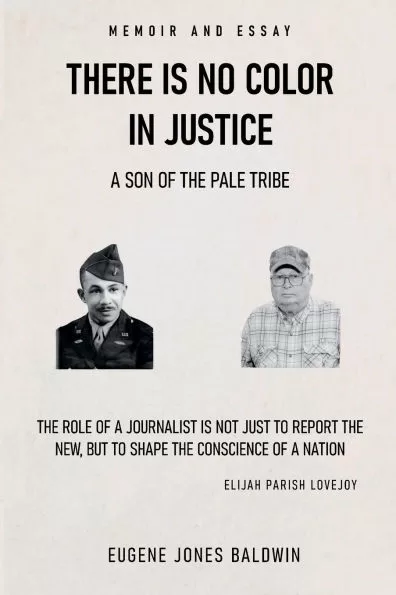
Eugene’s latest book, There is No Color in Justice, was published in 2025 and is available here.
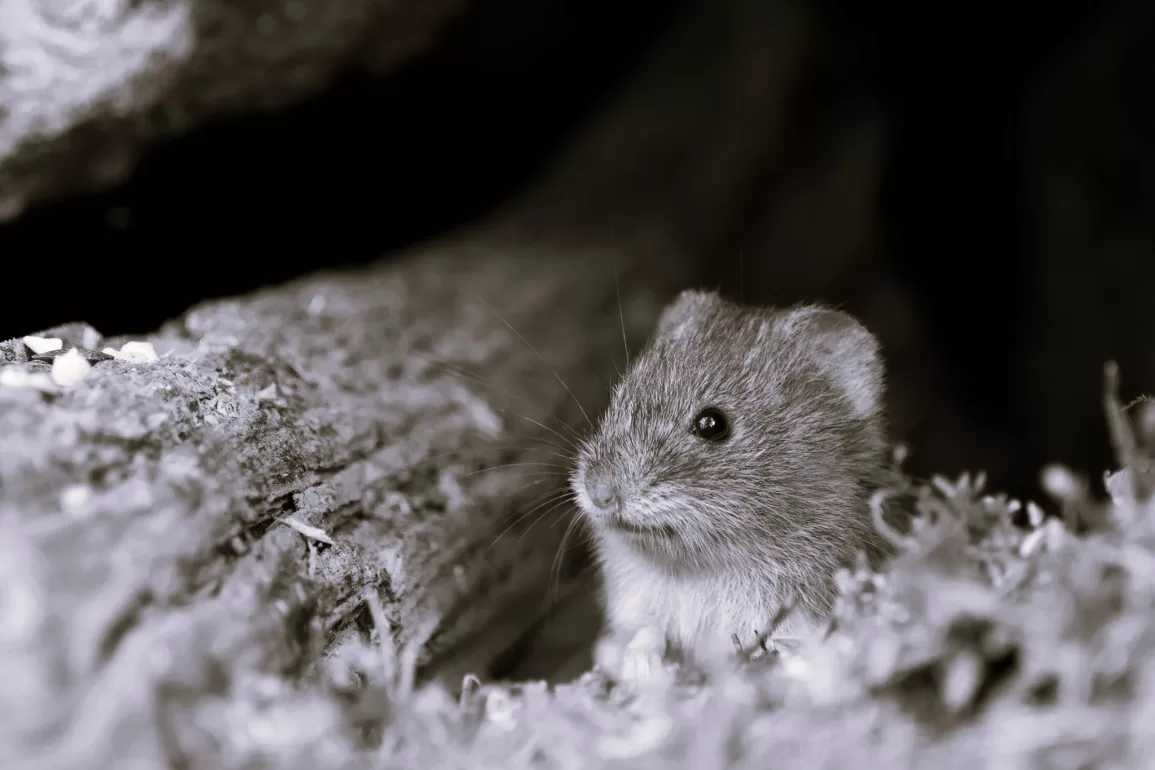
(Photo: David/flickr.com/ CC BY-ND 2.0)

This carefully curated collection brings together outstanding essays and short stories that delve into the landscapes, lives, and voices of rural spaces around the world.
Introducing the 2026 Best in Rural Writing print anthology, which features “The Escapee’s Lover.”
Coming soon!


- A Journalist and a Farmer Walk into a Barn by Eugene Jones Baldwin - December 18, 2025